
Flood insurance in Texas: questions for homeowners, renters, and small businesses
Flood coverage is separate from many property policies. Learn how Texas homeowners, renters, and small businesses can assess risk, coverage, timing, and practical questions.
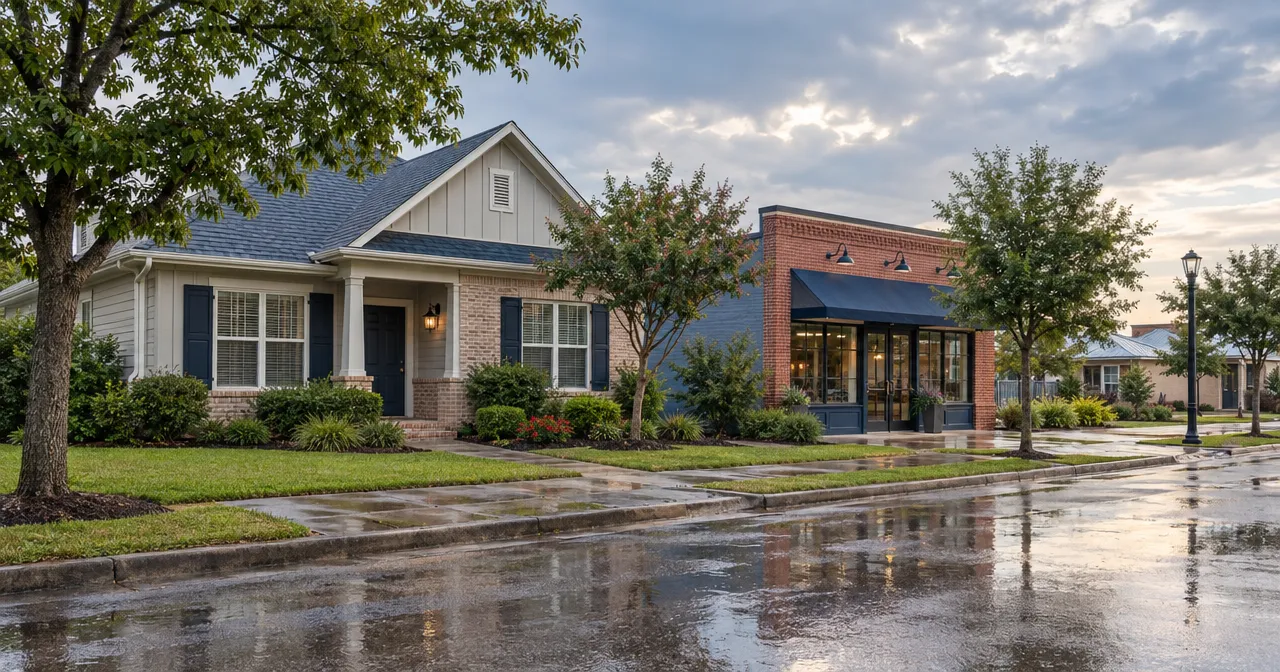
A rainstorm can create very different insurance questions. Water may collect outside and enter a house, soak a renter’s belongings, reach a shop’s inventory, or damage a parked car. Those losses do not necessarily belong under the same policy. The useful starting point is not simply, “Am I covered for water?” It is: Where did the water come from, what was damaged, and which policy—if any—addresses that type of loss?
For Texans, flood insurance is worth a separate conversation even when a homeowners, renters, or business property policy is already in place. The Texas Department of Insurance (TDI) explains that most home policies do not cover flood damage. The federal National Flood Insurance Program (NFIP) also notes that most renters and business policies do not cover floods. The details below are a framework for asking better questions, not a determination that any particular loss or property qualifies for coverage.
Start with the cause of the water, not just the damage
Insurance language uses “flood” more narrowly than everyday conversation. Think of rainwater accumulating outside, overflowing surface water, or water entering from a rising body of water. Compare that with a supply line that bursts inside the kitchen or rain entering through a damaged roof. The same soaked floor may lead to different coverage questions depending on the event and the wording of each policy. Do not assume every wet room is a flood claim, or that every non-flood water loss is automatically covered by a property policy.
For example, if widespread street water rises and flows through a doorway into a Rosenberg home, the owner should ask about flood coverage rather than relying on a homeowners policy alone. If a pipe under the sink suddenly fails, the owner should instead review the homeowners policy’s water-damage provisions, exclusions, and deductibles. A shop with water entering from an overflowing street would need to review its commercial property and any separate flood coverage. Each example is a question to investigate, not a promise about a claim.
When discussing a policy, describe the sequence: Did water rise from outside? Was it driven through an opening? Did it come from plumbing? What building parts and personal or business property were affected? These facts give an agent or claims professional a more useful starting point than the single word “water.”
A flood map helps, but it does not decide every risk
Flood maps matter for planning and for some mortgage requirements, but a low-risk map designation is not the same as a guarantee against flooding. FEMA’s Flood Map Service Center lets you search official flood-hazard information by address. Look at the map for the actual property, not just the neighborhood, and ask whether a lender has a flood-insurance requirement. A business should make the same inquiry about its location and financing arrangements.
A map also cannot answer every coverage question. It does not tell you the value of the contents in a first-floor office, whether an insurer will offer a particular policy, or how your deductible would work. A property outside a high-risk zone can still have flood exposure, as FEMA’s flood-risk guide makes clear. Rather than using the map as a yes-or-no verdict, use it alongside what you know about local drainage, your building, and the assets you would have difficulty replacing.
If you are buying property, obtain the address and any available flood-zone information early. If you already own or lease, you can still revisit the question when you move, remodel, store new equipment, or change how you use the space.
The right question depends on what you own or use
Homeowners: separate the building from what is inside
A homeowner may need to think about two categories: the building and personal contents. Repairs to floors, walls, and installed systems are different from replacing furniture, electronics, clothing, or other belongings. A flood policy’s building and contents coverage can have different limits and deductibles; ask which categories you are considering and what is excluded. The federal NFIP explains its building and contents coverage separately, including limits on coverage for some items and spaces.
Imagine water entering the ground floor and damaging drywall, an air-conditioning component, a sofa, and work equipment stored at home. One limit or coverage category should not be assumed to pay for all four. Ask where each item fits, how a covered loss would be valued, and whether there are restrictions for a basement or an enclosed area below the lowest elevated floor. A home policy and a flood policy may also have separate claim procedures and deductibles.
If you have a mortgage, ask the lender what it requires, but do not use the lender’s minimum as your entire planning method. Compare any required amount with your own questions about building repairs, belongings, and out-of-pocket costs. An agent can help explain available policy choices without assuming the lender has calculated the full cost of your potential loss.
Renters: your belongings are not your landlord’s building
A renter generally does not insure the structure they do not own, but personal belongings can still be affected by floodwater. Consider the furniture, clothes, kitchen items, computer, and other possessions you would need to replace. Ask whether contents-only flood coverage is available for your rental, how items would be valued, and what the deductible and exclusions are. The building owner’s coverage should not be treated as a substitute for your own contents protection.
A useful example: a tenant’s apartment and a landlord-owned storefront are both affected by the same street flooding. The tenant’s personal laptop and furniture, the landlord’s flooring, and the shop operator’s inventory are three different ownership and insurance questions. Clarify who owns each item before choosing limits. For a condo, review the association’s documents and master policy alongside your own unit and contents coverage so you know which parts of the property are yours to insure; do not assume the association’s policy answers every flood question.
Small businesses: list the assets that keep operations moving
Commercial property insurance and flood coverage should be discussed separately. A business owner might have a building, leased space, equipment, stock, furnishings, and customer property in different arrangements. Take a practical inventory: What is owned, what is leased, where is it stored, and what could be exposed to rising water? If you are a tenant, ask how improvements you paid for are treated, as well as your equipment and inventory.
Suppose a small retail shop has fixtures near the front entrance, inventory on low shelves, and a computer used for orders. If outside water enters the shop, the owner should not assume a standard business property policy responds to every item. Ask about separate flood coverage for the building if owned, business contents if owned, and any restrictions tied to location or storage. The NFIP describes commercial building and contents options; other available policies may have different terms.
Business owners should also ask what is not addressed. The NFIP’s coverage description does not include business-interruption or lost-income coverage. Do not infer that a flood policy would pay ongoing revenue losses merely because it covers damaged equipment. If continuity after a closure is a concern, raise that separately and review actual policy language. Likewise, a personal flood policy is not automatically a solution for a business’s property.
Timing matters before a forecast becomes urgent
The NFIP generally has a 30-day waiting period before a new flood policy takes effect, with certain exceptions, including some situations connected to a mortgage or map change. FEMA explains these exceptions on the NFIP policy page linked above. Do not assume a policy purchased as a storm approaches will protect against that storm. The effective date must be confirmed for the policy you are actually considering.
Other flood policies may have different waiting periods or conditions. Ask what applies, whether the insurer is offering coverage for your property, and when coverage would begin. A quote request is not the same as a bound policy; do not cancel or rely on existing coverage without confirming dates and terms. Starting a conversation before closing on a home, signing a lease, or entering a wet-weather season leaves room to compare details rather than rushing an answer.
If you already have a flood policy, note its renewal date. Review the named insured, property address, building and contents selections, and any updates to your building or operations. A move, remodel, new business inventory, or changed storage arrangement can make last year’s assumptions less useful.
What about a flooded car?
A parked vehicle belongs in a separate auto-insurance conversation. TDI explains that comprehensive auto coverage includes flood damage to your own car, subject to policy terms and deductible; liability-only auto coverage does not pay for damage to your own car. Review the TDI auto insurance guide and then check your actual declarations and policy. A home or business flood discussion should not be taken as confirmation that a vehicle is insured for rising water.
For a business vehicle, ask about its commercial auto policy and who owns or uses it rather than assuming a personal auto answer carries over. Make the vehicle question explicit if a household or shop parks cars where water sometimes collects.
Compare the details that change an outcome
“Flood coverage” is not one interchangeable package. Before deciding on an NFIP or other available option, write down the points that would matter after a loss:
- Property and people: Which address, building, unit, or business is insured? Is the property owner or tenant buying coverage, and for which belongings?
- Building versus contents: Are both included if needed? Are equipment, inventory, and improvements categorized as you expect? Are there special restrictions for basements, lower enclosed areas, or items kept outside?
- Limits and deductibles: What is the maximum under each coverage category, and what amount would you pay first? Ask whether more than one deductible could apply to a loss involving the building and contents.
- Valuation: Would a covered item be paid on a replacement-cost basis or with depreciation? Terms can depend on the item, policy, and eligibility conditions; do not assume the same method for every item.
- Expenses beyond physical repairs: Are temporary housing, lost income, or business interruption excluded, limited, or addressed under a different coverage? NFIP and other policies should be read on their own terms.
- Effective date and exclusions: When would coverage begin, and what water-related events or locations fall outside the policy? Confirm with the insurer or agent rather than relying on a general description.
Consider two quotes for the same address. One might have a different contents limit, deductible, or effective date. Comparing only the premium would conceal the differences that determine how much you could have to pay after a covered loss. For a shop, a policy that addresses damaged fixtures but not the economic effects of a shutdown may leave a separate planning question. The point is not to predict the perfect policy; it is to know which trade-offs you are making.
Prepare a short, useful flood-coverage conversation
You do not need an engineering report to start. Bring the address, whether you own or rent, any lender requirement you know about, and a rough account of what is on the lower level. Homeowners can note major building features and belongings; renters can list high-value essentials; businesses can identify equipment, stock, and the spaces where they work. If you already have home, renters, commercial property, or flood policies, have declarations pages available so the conversation begins with what is actually in force.
Ask three direct questions: What flood exposure should I consider at this address? What would this particular option cover—and leave out? When would it become effective? If a vehicle could also be exposed, ask about auto coverage separately. These questions are more useful than asking whether “water is covered” without identifying the source or the property at risk.
Brandon Sisco Insurance Agency can help Texans discuss home, auto, and business insurance needs and whether separate flood coverage deserves consideration. Request a conversation with your coverage interest and contact details, or call (281) 240-6610. The team can follow up to discuss next steps; a request is not an instant or binding policy. Coverage, eligibility, availability, and terms depend on the policy and insurer.